


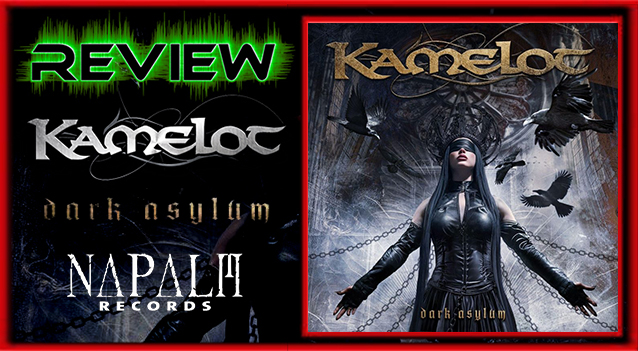

Artista: KAMELOT
Álbum: Dark Asylum
Sello: Napalm Records
Fecha lanzamiento: 28 - Agosto - 2026

LA BELLEZA DE PERDER LA RAZÓN
RavenHill abre sus puertas y Kamelot no tardan en llenarlo de catedrales, locura, ciencia, religión, marionetas y alquimia. Sobre el papel, Dark Asylum, decimocuarto álbum de los estadounidenses, tiene todos los ingredientes para acabar sepultado bajo su propio concepto. Después de más de tres décadas haciendo de la teatralidad una parte esencial de su lenguaje, la banda sabe que el decorado solo aguanta si detrás hay canciones, y por suerte, aquí las hay.
Una de las primeras cosas que sorprenden de Dark Asylum es lo compacto que resulta pese a todo ese aparataje. Quince cortes pueden hacer pensar en una obra mastodóntica, pero el disco apenas supera los 51 minutos y tres de ellos, ‘Sanctorium’, ‘Nocte Veritas’ y ‘Sanctum Requiem’, funcionan como introducción, transición y epílogo. Ninguna canción propiamente dicha alcanza los cinco minutos. Kamelot quieren contarnos una historia sin recurrir a suites de doce minutos ni narraciones eternas. Les bastan canciones concisas, motivos que regresan, letras conectadas y personajes que entran y salen de escena.
La puerta de entrada es RavenHill Asylum, una antigua catedral reconvertida en institución psiquiátrica donde ciencia, fe y locura conviven con bastante poco respeto por la salud mental del visitante. Cuanto más se profundiza en las letras, menos claro resulta que RavenHill sea únicamente un lugar físico. Sus pasillos y habitaciones pueden leerse también como compartimentos de una mente fracturada, recuerdos, culpas e identidades convertidos en arquitectura.
La propia palabra asylum resume buena parte del juego. Puede ser encierro o refugio. En ‘Ashen World’ el impulso es escapar, pero hacia su final reaparece ‘Sanctuary’, el hogar. Mi lectura es que el protagonista no termina abandonando RavenHill tanto como cambiando su relación con aquello que representa. En ‘Dark Asylum’ asegura haber construido la catedral que lo aprisiona y, en ‘Godlike Alchemy’, se define como la llave y la jaula. Prisionero, arquitecto y carcelero podrían ser la misma persona.
Nada mal para algo que, visto desde fuera, podría reducirse a “Kamelot en un manicomio victoriano”. En Ravenclaw… perdón, RavenHill (perdón, si no hago un guiño friki por crítica, no me quedo a gusto), oscuridad y luz vuelven continuamente y no solo como elementos de portada. Hay pérdida y recuperación, sueño y despertar; también voces que llaman desde alguna parte. El disco insiste en esas imágenes, a veces con bastante sutileza y otras con toda la catedral encima.
Ese mundo oscuro resulta muy familiar. Kamelot llevan años encontrando belleza en lugares desagradables, desde este manicomio hasta el mismísimo séptimo infierno en el que perdimos a Roy Khan. Y hay un nombre imposible de separar de ese sonido: Sascha Paeth.
Paeth produce a Kamelot desde The Fourth Legacy, allá por 1999. Dark Asylum es el undécimo álbum de estudio consecutivo de la banda bajo su producción y, a estas alturas, casi puede considerarse su miembro invisible. Conoce los mecanismos internos del grupo y sabe cuánto espacio necesita cada elemento. Eso importa en un disco que podría convertirse fácilmente en una pasta de coros, guitarras y orquesta. Jacob Hansen remata desde la mezcla y el mastering y evita precisamente eso: los riffs siguen pegando, la voz queda delante cuando toca y la base rítmica conserva peso. Incluso en los estribillos más cargados se puede seguir la guitarra sin tener que ir a buscarla debajo de veinte pistas. Dark Asylum suena musculoso y brillante, muy controlado, quizá incluso demasiado pulcro en algún momento. Cuando se desborda, al menos no se embarra.
También hay una lista considerable de colaboradores. Ignacia Fernández, Clémentine Delauney, Rannveig Sif Sigurðardóttir, Sólveig Sara Leupold o Lea-Sophie Fischer entran y salen del disco aportando voces y matices al mundo de RavenHill; rara vez da la sensación de que estén ahí porque había que imprimir cinco nombres más en la contraportada. Y entonces va Kamelot y mete al propio Tobi en el manicomio. Con Tobias Sammet la conexión con Avantasia sale sola, por su forma de entender el metal como teatro y por la presencia de Paeth en la historia de ambos proyectos. Me ahorraré lo de Kamelotasia (de momento).
‘Sanctorium’ abre RavenHill con narración y atmósfera. Es un recurso manido, sí, aunque con un álbum tan explícitamente teatral casi resultaría más raro entrar directamente hasta la cocina. Después, ‘Ashen World’ tiene que abrir de verdad el disco y lo hace con cierta “timidez”, entre comillas porque no hablo de contundencia. El riff inicial guía prácticamente todo el primer vistazo y la estructura avanza por terrenos que Kamelot conocen de memoria. En la primera escucha deja esa sensación incómoda de “tema de apertura de Kamelot que ya hemos oído antes”. Es efectivo, elegante y está perfectamente construido, quizá demasiado. Todavía no enseña qué tiene Dark Asylum de particular.
Con las escuchas gana bastante. Los detalles empiezan a asomar y el tramo final termina de enganchar, sobre todo cuando Tommy Karevik se saca de la manga uno de esos voceos sin palabras (ooooOOOoooOOoOOoh, ya sabéis como es esto) que se instalan directamente en el encéfalo. Es fácil imaginar a varios miles de personas devolviéndoselo en directo. Cuando ‘Ashen World’ llegue al escenario, y tiene toda la pinta de caer sí o sí, apostaría a que Karevik entregará esa melodía al público a la primera oportunidad. También me quedo con los gritos cercanos al gutural de las estrofas previas a los solos y del final. Son pequeñas capas que pasan inadvertidas hasta que llevas varias escuchas. Estructura y tempo, eso sí, siguen siendo del todo convencionales. ‘Ashen World’ necesita varias vueltas para dejar de parecer un saludo demasiado conocido.
‘Dark Asylum’ baja ligeramente las revoluciones y nos mete en los pasillos. La introducción de Kiara Huber da paso a guitarras y orquestaciones a un tempo medio-rápido, con Youngblood conservando suficiente peso para que el decorado no engulla la canción. Karevik empieza aquí a enseñar esa falta de contención que será una constante en buena parte del álbum. En la segunda estrofa, sobre todo, parece dispuesto a exprimir cada frase antes de desembocar en un estribillo puro Kamelot, seguramente el momento más inmediato del tema.
No ha terminado de subir demasiado en mi ranking particular del álbum. Me interesa bastante más la transición hacia la sección instrumental, Palotai encontrando su hueco con el teclado y esas notas de piano que rebajan la tensión antes de recuperar el pulso. También funciona bien la manera de integrar las colaboraciones sin ponerle un foco enorme encima. El conjunto, en cambio, se me queda por debajo de esos detalles. Aquí la familiaridad de la fórmula pesa.
‘Sanctuary’ entra bastante más arriba. Empieza como un medio tiempo poderoso y los arreglos orquestales, junto con unos coros cargadísimos, provocan el primer gran estallido del álbum. La entrada de las voces femeninas cambia el color del tema y la voz gutural lo vuelve a ensuciar deliciosamente, justo después. Esa alternancia entre perturbación y seguridad funciona mejor que cualquier explicación del título. En el estribillo final la voz femenina toma el mando, el tema sube un tono y ahí sí: primer momento de los que obligan a volver atrás.
El título, además, empieza a complicar el concepto. ‘Sanctuary’ significa refugio y aparece cuando el protagonista todavía parece querer escapar. Clémentine Delauney e Ignacia Fernández amplían la escena sin disputar el centro a Karevik; sus voces hacen que ese refugio deje de sentirse como algo puramente individual. Conviene guardar la palabra “sanctuary”. Volverá cuando las cosas estén bastante peor.
‘Nocte Veritas’ sirve de anclaje narrativo con coros misteriosos y los consabidos arreglos orquestales. Breve, funcional y al grano. Después entra Tobias Sammet en ‘One Last Masquerade’, y ahí el disco cambia de gesto.
Que Sammet cante bien no es noticia. Lo que interesa es cómo interpreta. Máscaras, marionetas, figurines, minuetos nocturnos, todo el vocabulario del tema pertenece al escenario y Tobi se mueve ahí como pez en el agua. Dramatiza las frases, cambia intenciones y acaba sonando más a personaje que a invitado con estrofa asignada. Frente a Karevik aparece además un pequeño duelo actoral, y Karevik lleva años demostrando que tampoco necesita demasiada invitación para meterse en un papel.
El riff principal tiene peso, el estribillo pide participación y vuelve ese diálogo entre guitarra y teclado tan característico de Kamelot. Aun así, las voces se llevan casi toda la atención. Sammet entra realmente en su universo durante unos minutos y RavenHill se acerca peligrosamente a una función de Avantasia. Solo que esta vez el escenario no es suyo.
Casi en la mitad del álbum llega la balada. ‘Ivy, My Dear’ reduce de golpe la escala con guitarra acústica, arreglos de flauta y un Karevik que no necesita demasiadas capas para sostener la emoción. Después de tanta arquitectura, máscaras y enfermedad, el escenario se hace pequeño. Ya no parece que estemos recorriendo una institución entera, sino entrando en la habitación de alguien.
También hay un pequeño vínculo con ‘One Last Masquerade’, donde aparecía mencionada la hiedra venenosa (poison ivy). Puede ser un simple juego de continuidad, aunque encaja demasiado bien en un álbum atento a estos pequeños ecos como para ignorarlo. Musicalmente, el cambio le sienta de maravilla al conjunto. La melodía tiene espacio, Karevik puede frasear sin pelearse con una muralla sinfónica y la canción respira. No suena a la balada que tocaba poner en la pista siete.
La producción vuelve a ser descomunal incluso aquí. Si la llevan al directo tendrán que simplificar arreglos o apoyarse bastante en pistas y samplers, porque un único teclista lo tendría complicado para reproducir todas esas capas. Hacía tiempo que una balada de Kamelot no me llegaba tanto. Es también uno de los pocos momentos del disco que pertenecen casi por completo a Karevik; más allá de algún acompañamiento femenino muy puntual, ‘Ivy, My Dear’ depende de lo que él sea capaz de hacer con cada frase. Y hace bastante.
Cambio abrupto. ‘Godlike Alchemy’ entra con fuerza, aunque se mantiene en el medio tiempo. Aquí empieza a notarse con claridad el principal problema de Dark Asylum. La primera mitad ha presentado suficientes cambios de ambiente como para disimular que casi todo parte de una fórmula muy conocida, pero a partir de este punto, varios temas empiezan a rozarse entre sí. La calidad no cae de golpe, ni mucho menos, pero sí aparece esa sensación de haber oído hace veinte minutos un patrón parecido. ‘Ashen World’ ya había avisado y el tema titular tampoco terminó de despegar del todo. Para mí, ese continuismo pesa más que cualquier exceso conceptual.
El contraste entre guitarras y capas sinfónicas encaja con la alquimia de la letra, transformar una materia sin volverla irreconocible, y coloca al protagonista ante una de las frases clave del disco: “the key and the cage”. La prisión empieza a mirarse desde dentro. Karevik está especialmente cómodo, con más músculo y bastante libertad para pasar de la contención al desgarro. Como single aislado quizá no sea de los que más golpean; dentro de RavenHill encuentra mejor su sitio.
‘The Sleeping Mind (Orphic Paradigm)’ deja los arreglos algo más atrás y le sienta de maravilla. La batería se vuelve mucho más visible, ese doble bombo ametralladora no parece de este mundo y Youngblood disfruta de un protagonismo que echo de menos en algún otro punto del disco. El título nos lleva hacia el subconsciente justo después de la revelación de ‘Godlike Alchemy’. El protagonista ha empezado a comprender quién es, pero eso no ordena la habitación. Cuanto más despierta, más cosas encuentra debajo.
Lo intento, pero aquí no logro encontrarle demasiadas pegas. El estribillo entra con fuerza, la batería empuja de verdad y Youngblood tiene espacio para que la guitarra sea algo más que otra capa de la producción. Dark Asylum me funciona mejor cuando se rebaja el aparataje y aparece el heavy metal con menos adorno. Esa es, de hecho, otra pequeña pega al conjunto: Paeth y Hansen hacen un trabajo tremendo, pero hay canciones que ganan carácter en cuanto dejan de demostrarlo todo a la vez. Quizá por eso tengo tantas ganas de escuchar algunas en directo.
‘Kaleidoscope’ recupera velocidad y algo más de luz. Es uno de los momentos más claramente power metal del disco y uno de los que mejor esquivan la sensación de repetición de esta segunda mitad, precisamente porque cambia la dinámica y deja que melodía y guitarra tiren hacia delante. El concepto del caleidoscopio encaja con la identidad fracturada del relato: las mismas piezas cambian de posición y producen otra imagen. Y ya. Tras darle un par de vueltas al borrador de esta crítica, creo que el que está empezando a ser reiterativo con la fórmula Kamelot soy yo, así que prometo no volver a explicarla.
‘Enigma (Think of Me)’ baja las revoluciones y, con 4:56, se convierte en la canción más “larga” del álbum. El dato sigue siendo curioso: Kamelot han metido quince pistas en poco más de cincuenta minutos y ni siquiera aquí sienten la necesidad de estirar una idea porque sí. La letra vuelve a la memoria y al miedo a desaparecer. “Think of me” puede sonar a petición de recuerdo, aunque dentro de RavenHill también tiene algo de súplica de alguien que empieza a dudar de su propia identidad.
El cambio de dinámica funciona, aunque ‘Enigma’ me resulta menos memorable que varias de sus compañeras. Tiene solemnidad, peso y ese aire de cierre de segundo acto que le corresponde por posición, pero la melodía no se me queda con la misma facilidad. Ojo, eso sí, a la sección de solos. Probablemente sea la mejor del álbum y casi consigue cambiarme la valoración del tema por sí sola.
‘Cassandra’s Disease’ empieza con calma y pronto se convierte en un medio tiempo potente que me pide directo desde la primera vuelta. Si había un personaje mitológico con papeletas para terminar encerrado en RavenHill era Cassandra. La profetisa condenada a decir la verdad sin que nadie la crea encaja de manera bastante retorcida con la enfermedad del protagonista. El “round and round”, repetido de esa forma, deja de sonar a simple recurso lírico. Parece un síntoma.
Karevik canta y transmite de mil maneras, pero el momento que me termina de ganar llega al final. Cuando parece que la canción se acaba, Kamelot cambian el tempo y meten de la nada un estribillo acelerado. No es un giro complicado ni una marcianada progresiva: simplemente entra donde no lo esperaba y la canción se vuelve a levantar. Vaya, pensaba que ya me estaba fascinando y esa última sorpresa termina de decidirme. Va directa a mi top 3 del álbum.
Con apenas dos minutos, ‘Beneath the Moon (Tunglið)’ funciona casi como un interludio con entidad propia. Una acústica de marcado aroma céltico abre el tema, entra el violín de Lea-Sophie Fischer, de Eluveitie, y después llegan las voces de Rannveig Sif Sigurðardóttir y Sólveig Sara Leupold. Hay algo de Blackmore’s Night en esa delicadeza y en el color tradicional. Sobre el papel podría parecer un apéndice raro; colocado entre ‘Cassandra’s Disease’ y ‘The Puppet King’, agradezco muchísimo esos dos minutos.
Tunglið significa 'la luna' en islandés, idioma en el que está interpretada la letra. Después de tanta densidad, esos dos minutos dejan entrar aire. En directo puede ser peligrosa: mal colocada, rompe el ritmo de un concierto; bien montada, obliga a bajar pulsaciones justo antes del último golpe. Tengo curiosidad por ver qué hacen con ella.
‘The Puppet King’ juega al despiste desde el primer segundo. Una voz melódica se desliza sobre un piano casi desnudo y durante unos quince segundos parece que Kamelot van a concedernos otra pausa. Es un espejismo. Entra el riff y se acabó la calma. Melódico, dramático y absolutamente matador, no necesita una complejidad absurda: la fuerza está en cómo la melodía arrastra consigo la voz y el resto de la banda.
Karevik transmite dolor y desgarro como en pocos momentos del disco. Los flirteos anteriores con la luz aquí se difuminan y la esperanza prácticamente desaparece de la interpretación. Luego llega la sección instrumental y todavía encuentra otra marcha cuando parecía que ya no quedaba demasiado por descargar. Dark Asylum no ha estado precisamente conteniéndose durante cincuenta minutos, pero ‘The Puppet King’ sí suena a algo que la banda había guardado para el final. Es de los pocos momentos en los que la grandilocuencia deja de parecer una decisión estética y se convierte directamente en violencia.
Podría terminar perfectamente ahí. Sería un cierre brutal. Kamelot han dado con una melodía demasiado buena para dejarla morir y ‘Sanctum Requiem’ la recoge al piano, ya sin el músculo del tema anterior. Esa misma línea vocal, desnuda, cambia por completo de efecto. La frontera entre canción y epílogo prácticamente desaparece. Más que buscar otro golpe, dejan que el anterior siga resonando hasta apagarse.
Antes hay un detalle que termina de unir el recorrido. ‘The Puppet King’ recupera en sus últimos versos la letra de ‘Sanctuary’: el amigo y la oscuridad, la liberación, el refugio, el hogar. Aquello que habíamos oído mucho antes vuelve cuando el viaje está acabando y cambia de sentido. Empezamos queriendo escapar de un mundo de ceniza. Terminamos hablando de hogar. Por eso mi lectura de RavenHill acaba lejos de una simple institución de la que hay que huir; quizá había que atravesarla, aunque eso deje al pobre protagonista hecho unos zorros por el camino.
Ahí es donde más me convence Dark Asylum, cuando las conexiones aparecen dentro de las canciones y no necesitan un mapa del manicomio al lado. También quedan bastante claros sus límites. ‘Ashen World’ tarda en encontrar personalidad, el tema titular no termina de destacar y en la segunda mitad aparece cierta sensación de déjà vu entre medios tiempos. La fórmula está tan dominada que a veces Kamelot pueden sonar demasiado cómodos dentro de ella. Quien venga buscando una revolución va a salir decepcionado.
No hace falta fingir una ruptura que no existe. La mejora está en detalles muy concretos: Youngblood respira más cuando la orquesta se aparta, las voces invitadas suelen tener una función dentro del relato y ‘Ivy, My Dear’ demuestra cuánto puede hacer Karevik cuando le quitan peso de alrededor. Después ‘The Puppet King’ reutiliza una melodía en ‘Sanctum Requiem’ y consigue que el epílogo parezca parte de la canción anterior. Son ajustes dentro de una maquinaria conocida. Algunos se oyen a la primera; otros tardan bastante más.
Dark Asylum es más de lo mismo, pero mejor.
Dr. Reifstein

KAMELOT
DARK ASYLUM: THE BEAUTY OF LOSING YOUR MIND
English version
RavenHill opens its doors and Kamelot waste no time filling it with cathedrals, madness,
science, religion, puppets and alchemy. On paper, Dark Asylum , the Americans' fourteenth
album, has every ingredient needed to end up buried beneath the weight of its own concept.
After more than three decades of making theatricality an essential part of their language, the
band knows the scenery only holds up if there are songs behind it - and fortunately, there are.
One of the first things that strikes you about Dark Asylum is how compact it feels despite all that
machinery. Fifteen tracks might suggest something colossal, yet the album barely tops 51
minutes, and three of them, 'Sanctorium' , 'Nocte Veritas' and 'Sanctum Requiem' , serve as
introduction, transition and epilogue. None of the actual songs reaches five minutes. Kamelot
want to tell us a story without resorting to twelve-minute suites or endless narration. Concise
songs, recurring motifs, connected lyrics and characters drifting in and out of the scene are
enough.
The gateway is RavenHill Asylum, a former cathedral turned psychiatric institution where
science, faith and madness coexist with remarkably little regard for the visitor's mental health.
The deeper you go into the lyrics, the less clear it becomes that RavenHill is only a physical
place. Its corridors and rooms can also be read as compartments of a fractured mind, with
memories, guilt and identities turned into architecture.
The word asylum itself sums up much of the game. It can mean confinement or refuge. In
'Ashen World' the impulse is to escape, but near the end 'Sanctuary' - home - reappears. My
reading is that the protagonist does not so much leave RavenHill as change his relationship with
what it represents. In 'Dark Asylum' he claims to have built the cathedral that imprisons him
and, in 'Godlike Alchemy' , defines himself as both the key and the cage. Prisoner, architect and
jailer may all be the same person.
Not bad for something that, seen from the outside, could be reduced to " Kamelot in a Victorian
madhouse". In Ravenclaw... sorry, RavenHill (sorry, if I don't squeeze one geeky reference into
every review, I'm not happy), darkness and light keep returning, and not merely as cover-art
elements. There is loss and recovery, sleep and awakening; voices calling from somewhere too.
The album insists on these images, sometimes with quite a bit of subtlety and sometimes by
dropping the whole cathedral on your head.
That dark world feels very familiar. Kamelot have spent years finding beauty in unpleasant
places, from this asylum to the very seventh circle of hell where we lost Roy Khan . And there is
one name impossible to separate from that sound: Sascha Paeth .
Paeth has been producing Kamelot since The Fourth Legacy , back in 1999. Dark Asylum is
the band's eleventh consecutive studio album under his production and, by now, he can almost?
be considered their invisible member. He knows the group's inner workings and exactly how
much space each element needs. That matters on an album that could easily turn into a sludge
of choirs, guitars and orchestra. Jacob Hansen finishes the job with mixing and mastering and
prevents exactly that: the riffs still hit, the vocals sit up front when they need to, and the rhythm
section keeps its weight. Even in the most overloaded choruses, you can still follow the guitar
without having to dig for it beneath twenty tracks. Dark Asylum sounds muscular and bright,
extremely controlled - perhaps even a little too pristine at times. When it does overflow, at least it
never turns muddy.
There is also a sizeable guest list. Ignacia Fernández , Clémentine Delauney , Rannveig Sif
Sigurðardóttir , Sólveig Sara Leupold and Lea-Sophie Fischer drift in and out of the album,
adding voices and shades to the world of RavenHill; it rarely feels as though they are there
because someone needed five more names on the back cover. And then Kamelot go and throw
Tobi himself into the asylum . With Tobias Sammet , the Avantasia connection is unavoidable,
both in the way he understands metal as theatre and through Paeth 's presence in the history of
both projects. I'll spare you " Kamelot asia" (for now).
'Sanctorium' opens RavenHill with narration and atmosphere. It is a well-worn device, yes,
although on an album this openly theatrical it would almost be stranger to dive straight into the
action. 'Ashen World' then has to open the album for real, and it does so with a certain
"shyness" - quotation marks because I'm not talking about heaviness. The opening riff dominates
almost the entire first impression, and the structure moves through territory Kamelot know by
heart. On first listen it leaves that awkward feeling of "we've heard this Kamelot opening song
before". It is effective, elegant and perfectly constructed, perhaps too perfectly. It still does not
show what makes Dark Asylum distinctive.
It improves considerably with repeated listens. The details begin to surface, and the final stretch
seals the deal, especially when Tommy Karevik pulls out one of those wordless vocal lines
(ooooOOOoooOOoOOoh, you know the kind) that install themselves directly in your brain. It is
easy to picture several thousand people singing it back live. When 'Ashen World' reaches the
stage - and it has "inevitable setlist song" written all over it - I'd bet Karevik hands that melody to
the crowd at the first opportunity. I also like the almost-growled screams in the verses before the
solos and at the end. They are small layers that go unnoticed until you have lived with the song
for a few spins. Structure and tempo, though, remain entirely conventional. 'Ashen World' needs
a few rounds before it stops sounding like an overly familiar hello.
'Dark Asylum' eases off slightly and takes us into the corridors. Kiara Huber 's introduction gives
way to guitars and orchestration at a mid-fast tempo, with Youngblood retaining enough weight
for the scenery not to swallow the song. Karevik begins to show the lack of restraint that will
become a constant across much of the album. In the second verse especially, he seems
determined to squeeze every last drop out of each phrase before landing in a pure Kamelot
chorus, probably the song's most immediate moment.
It hasn't climbed especially high in my personal ranking of the album. I'm much more interested
in the transition into the instrumental section, Palotai finding his space on the keys and those
piano notes lowering the tension before the pulse returns. The guest parts are also integrated? well without a giant spotlight being thrown on them. As a whole, though, the song falls short of
those individual details for me. Here, the familiarity of the formula weighs it down.
'Sanctuary' lands much higher. It starts as a powerful mid-tempo track, and the orchestral
arrangements, together with heavily layered choirs, deliver the album's first major explosion. The
arrival of the female voices changes the colour of the song, and the growled vocal dirties it up
deliciously again just afterwards. That alternation between disturbance and safety explains the
title better than any paragraph could. In the final chorus, the female voice takes over, the song
modulates up a key and there it is: the first moment that makes you go back and hear it again.
The title also begins to complicate the concept. 'Sanctuary' means refuge, yet it appears while
the protagonist still seems to want out. Clémentine Delauney and Ignacia Fernández broaden
the scene without fighting Karevik for the centre; their voices make that refuge feel less purely
individual. Keep the word "sanctuary" in mind. It will return when things are in a much worse
state.
'Nocte Veritas' serves as a narrative anchor with mysterious choirs and the inevitable orchestral
arrangements. Brief, functional and straight to the point. Then Tobias Sammet walks into 'One
Last Masquerade' , and the album changes expression.
That Sammet can sing is hardly news. What matters is how he performs. Masks, puppets,
figurines, nocturnal minuets - the entire vocabulary of the song belongs to the stage, and Tobi is
completely at home there. He dramatises lines, changes his delivery and ends up sounding more
like a character than a guest who has been handed a verse. Opposite Karevik , there is also a
small acting duel, and Karevik has spent years proving he does not need much encouragement
to step into a role either.
The main riff has weight, the chorus begs for participation, and that trademark Kamelot guitar-
keyboard dialogue returns. Even so, the voices command most of the attention. Sammet
genuinely steps into their universe for a few minutes and RavenHill drifts dangerously close to an
Avantasia show. Except this time the stage is not his.
Near the album's halfway point comes the ballad. 'Ivy, My Dear' suddenly pulls the scale right
back with acoustic guitar, flute arrangements and a Karevik who needs very few layers to carry
the emotion. After so much architecture, masks and illness, the stage becomes small. It no
longer feels as though we are walking through an entire institution, but entering someone's room.
There is also a small link to 'One Last Masquerade' , where poison ivy was mentioned. It may
simply be a continuity trick, but on an album this attentive to small echoes, it fits too well to
ignore. Musically, the change does the record a world of good. The melody has room, Karevik
can phrase without fighting a symphonic wall, and the song breathes. It does not sound like the
obligatory ballad that happened to be placed at track seven.?
The production remains huge even here. If they take it to the stage, they will have to simplify the
arrangements or lean pretty heavily on backing tracks and samples, because a single keyboard
player would have a hard time reproducing all those layers. It has been a while since a Kamelot
ballad hit me this much. It is also one of the few moments on the album that belongs almost
entirely to Karevik ; apart from the occasional female backing line, 'Ivy, My Dear' depends on
what he can do with every phrase. And he does a lot.
Hard cut. 'Godlike Alchemy' comes in forcefully, though it stays mid-tempo. This is where Dark
Asylum 's main problem becomes clearly visible. The first half offers enough changes of
atmosphere to disguise the fact that almost everything grows from a very familiar formula, but
from here several songs start brushing against one another. The quality does not suddenly drop -
far from it - but you do start getting the feeling that you heard a similar pattern twenty minutes
ago. 'Ashen World' had already sounded the warning, and the title track never quite took off
either. For me, that continuity weighs more heavily than any conceptual excess.
The contrast between guitars and symphonic layers suits the alchemy in the lyrics - transforming
matter without making it unrecognisable - and brings the protagonist to one of the album's key
lines: "the key and the cage". The prison begins to be seen from within. Karevik sounds
particularly at ease, with more muscle and plenty of room to move from restraint to anguish. As a
standalone single, it may not be among the hardest hitters; inside RavenHill it finds its place
more naturally.
'The Sleeping Mind (Orphic Paradigm)' pushes the arrangements a little further back, and it
works wonders. The drums become much more visible, that machine-gun double kick barely
sounds human, and Youngblood gets the prominence I miss elsewhere on the record. The title
takes us towards the subconscious immediately after the revelation in 'Godlike Alchemy' . The
protagonist has started to understand who he is, but that does not tidy the room. The more he
wakes up, the more he finds underneath.
I try, but I cannot find much to complain about here. The chorus hits hard, the drums genuinely
drive the song, and Youngblood has room for the guitar to be more than one more layer in the
production. Dark Asylum works best for me when the machinery is toned down and the heavy
metal comes through with fewer decorations. That is, in fact, another small criticism of the album
as a whole: Paeth and Hansen do a tremendous job, but some songs gain character the moment
they stop trying to do everything at once. Maybe that is why I am so eager to hear a few of them
live.
'Kaleidoscope' brings back speed and a little more light. It is one of the album's clearest power-
metal moments and one of the songs that best avoids the repetition creeping into the second
half, precisely because it changes the dynamics and lets melody and guitar pull forward. The
kaleidoscope concept fits the story's fractured identity: the same pieces shift position and create
a different image. That's it. After going over this review draft a couple of times, I think I'm the one
starting to repeat myself about the Kamelot formula, so I promise I won't explain it again.
'Enigma (Think of Me)' eases off and, at 4:56, becomes the album's "longest" song. The
statistic is still amusing: Kamelot have packed fifteen tracks into just over fifty minutes and even
here they feel no need to stretch an idea for the sake of it. The lyrics return to memory and the
fear of disappearing. "Think of me" can sound like a plea to be remembered, though inside
RavenHill it also carries the desperation of someone beginning to doubt their own identity.
The shift in dynamics works, although 'Enigma' sticks with me less than several of its
companions. It has solemnity, weight and the end-of-act-two feel its position calls for, but the
melody does not lodge itself in my head as easily. Keep an ear on the solo section, though. It is
probably the best on the album and almost manages to change my opinion of the whole song on
its own.
'Cassandra's Disease' starts calmly and soon turns into a powerful mid-tempo track that has me
wanting to hear it live from the first spin. If any mythological character was destined to end up
locked inside RavenHill, it was Cassandra. The prophetess condemned to tell the truth and never
be believed fits the protagonist's illness in a rather twisted way. Repeated like that, the "round
and round" stops sounding like a simple lyrical device. It sounds like a symptom.
Karevik sings and communicates in a thousand different ways, but the moment that completely
wins me over comes at the end. Just when the song seems finished, Kamelot change the tempo
and pull a faster chorus out of nowhere. It is not a complicated twist or some prog-metal act of
lunacy; it simply arrives where I did not expect it, and the song stands back up again. Right, I
already thought I was fascinated, and that final surprise settles it. Straight into my top three on
the album.
At barely two minutes, 'Beneath the Moon (Tunglið)' works almost like an interlude with a life of
its own. A distinctly Celtic-flavoured acoustic guitar opens the piece, then comes the violin of
Lea-Sophie Fischer from Eluveitie , followed by the voices of Rannveig Sif Sigurðardóttir and
Sólveig Sara Leupold . There is something of Blackmore's Night in that delicacy and traditional
colouring. On paper it might look like an odd add-on; placed between 'Cassandra's Disease'
and 'The Puppet King' , I am hugely grateful for those two minutes.
Tunglið means "the moon" in Icelandic, the language in which the lyrics are sung. After so much
density, those two minutes let some air in. Live, it could be dangerous: put in the wrong place, it
breaks a concert's momentum; staged well, it forces the pulse down just before the final blow. I'm
curious to see what they do with it.
'The Puppet King' plays misdirection from the first second. A melodic voice glides over an
almost bare piano and for around fifteen seconds it seems Kamelot are going to grant us
another breather. It's a mirage. The riff arrives and the calm is over. Melodic, dramatic and
absolutely lethal, it does not need absurd complexity: its force lies in the way the melody drags
the voice and the rest of the band along with it.
Karevik conveys pain and anguish as in few other moments on the album. The earlier flirtations
with light fade here, and hope almost disappears from the performance. Then the instrumental?
section arrives and finds yet another gear when it seemed there was little left to unleash. Dark
Asylum has hardly spent fifty minutes holding back, but 'The Puppet King' does sound like
something the band had saved for the end. It is one of the few moments where grandeur stops
feeling like an aesthetic choice and turns directly into violence.
It could end perfectly well there. It would be a brutal closer. Kamelot have found a melody too
good to let die, and 'Sanctum Requiem' picks it up on piano, now stripped of the muscle of the
previous track. That same vocal line, laid bare, has a completely different effect. The boundary
between song and epilogue practically disappears. Rather than look for another hit, they let the
previous one keep ringing until it fades out.
But before that, one detail ties the journey together. In its final lines, 'The Puppet King' brings
back the lyrics of 'Sanctuary' : the friend and the darkness, release, refuge, home. Something we
heard much earlier returns as the journey is ending and changes meaning. We began wanting to
escape a world of ash. We end up talking about home. That is why my reading of RavenHill ends
up far from a simple institution one has to flee; perhaps it had to be crossed, even if it leaves the
poor protagonist in a hell of a state along the way.
That is where Dark Asylum convinces me most: when the connections emerge inside the songs
and do not require a map of the madhouse beside you. Its limits are also fairly clear. 'Ashen
World' takes time to find a personality, the title track never quite stands out, and the second half
develops a certain mid-tempo deja vu. The formula is so thoroughly mastered that Kamelot can
sometimes sound too comfortable inside it. Anyone arriving in search of a revolution will leave
disappointed.
There is no need to pretend there is a break with the past when there is not. The improvement
lies in very specific details: Youngblood breathes more freely when the orchestra steps aside,
the guest voices usually serve a purpose within the story, and 'Ivy, My Dear' shows how much
Karevik can do when some of the weight around him is removed. Then 'The Puppet King'
reuses a melody in 'Sanctum Requiem' and makes the epilogue feel like part of the previous
song. These are adjustments inside a familiar machine. Some are obvious on the first listen;
others take much longer to reveal themselves.
Dark Asylum is more of the same, only better.
Dr. Reifstein